Who Gets to Be the Hero?
On heroes, housework, and the labor no one sees
What Hannah Arendt taught me about burnout, and why fantasy heroes always seem to have magic doing their laundry.
A couple of years ago, I burned out. Hard. After years of overwork, countless experiences with subtle (and not-so-subtle) sexism, and a whole parade of family emergencies, I was more tired than I have ever been. I struggled to get out of bed in the morning, and I felt every cell of my body revolt when I opened up my computer for my first meeting. I struggled to focus, and I was constantly tired. I felt angry all the time.
I was struggling to fit in and feel recognized at my job, and for the last several months I had been overcompensating by putting in more time and effort. But the funny thing is, if you had asked me what I had accomplished, I had a hard time telling you. I had improved our documentation on testing practices and fixed bugs and written some of my manager’s communications and mentored other engineers and suggested countless improvements (that were mostly ignored), but in the eyes of my colleagues and management chain, none of it ever seemed to count for anything. I wasn’t working on any of the hard problems that really interested me, because no matter how hard I worked or how much I advocated for myself, I couldn’t seem to get in the room where they were being talked about or carve out time to focus on them.
Around this time, I started pulling books off my shelf looking for answers and I learned about Hannah Arendt’s definitions of work and labor. Labor is what we do to stay alive. “It is indeed the mark of all laboring,” she writes, “that it leaves nothing behind, that the result of its effort is almost as quickly consumed as the effort is spent.” Historically, this referred to agricultural, household, and care work, but she rightly points out that in the modern era, this kind of endless labor has grown to include manufacturing and administrative work. Whether this labor sustains life or business, it has no end. There is no day when we are finished surviving, and as much as we would like to believe otherwise, there is no day when CEOs and shareholders will say they have generated enough wealth.
Work is a different animal. Work involves creativity and judgement. It can produce something lasting, even if it has no market value. The real difference between the two isn’t what gets accomplished, but the rhythm that it follows and how it feels to do it. Work can be finished, and when you’re lucky, followed by rest before the next thing begins. Labor just never ends.
Most of us spend our days doing some mixture of the two, and the balance is rarely one we choose. Some of us have jobs where we build things and solve interesting problems. And then there is the maintenance, the cleanup, the thousand tasks that someone has to do but no one is praised for doing. The second kind of work is equivalent to doing the laundry. No amount of time spent ever produces less of it. There’s no launch party, no breakthrough, no triumph over adversity—just the daily struggle against entropy.
This is the fault line I keep returning to: not skilled vs. unskilled, or even hard vs. easy, but recognized vs. unrecognized. Some labor is seen—it earns a title, a raise, a story you tell at a party. Most of it isn’t, and the unseen work isn’t evenly distributed among workers. It tends to pile up on the same people again and again.
For most of my career, I felt that accumulation in my bones. It was hard to build anything that lasted when I spent most of my time cleaning up after other people, coordinating other work, or trying to convince my team to follow the practices that will have fewer long-term tradeoffs. When I described a project I was helping with to a friend, she asked, “But how is that helping your career?” It really wasn’t.
And who ends up doing it is not random. Historically we’ve sorted work by gender: men hunt the bear or land the big contract; women do the cooking, the childcare, the administrative work no one remembers. The same logic survives at the office. I don’t think it’s a coincidence that the person handed the jobs nobody else wants is also, more often than not, not a white man. Women are expected to absorb more of that work and to feel less able to refuse it.
Jenny Odell notes in Saving Time that multiple studies show women are expected to say yes to requests for help more readily than men; in one, men held back from volunteering favors when women were in the group, but raised their hands sooner when the group was all male. And for women of color, Odell writes, the cost of guarding their own time is higher still—they’re more likely to be cast as “aggressive, out-of-character, or too emotional.”
We can’t separate the philosophy from the politics. The line between recognized and unrecognized labor is also a line about power: who gets to make the lasting thing, and who does the invisible labor that frees them to make it.
Eventually I hit a wall, and I took two months of leave from my job.
I envisioned myself having luxurious amounts of time—sleeping in, going to the gym every day, cooking better food, traveling as much as I wanted to. However, for the first few weeks, that’s not what happened. In true 21st-century fashion, I spent several hours trying to sign up for COBRA insurance when my company’s online portal required seven forms of authentication and kept throwing errors when it tried to process my payment information. When I looked around my house, there were piles of stuff I had been meaning to take to Goodwill, trim that hadn’t been painted, cabinets that needed to be re-organized, weeds in the garden that needed to be pulled, and piles of laundry that needed to be folded. Even with a lot more time on my hands, these sorts of chores have a way of expanding infinitely to fill it.
In an effort to slow down, I got engrossed in a certain fantasy romance series.
And while I won’t comment on whether my chosen reading material was good, it was definitely engrossing. There was an epic battle between good and evil and no lack of hardship, pain, and trauma. However, I described the series to a friend as “fantasy in more ways than one” because the world is also full of magical realms that have perfect weather all year round, luxurious castles, shirtless men, and lots of help with domestic labor. Meals appear at the snap of a finger. Sheets are magically changed, and there is always a fresh change of clothes in the drawer. If I lived in a world like this one, I’m pretty sure I would also be willing to risk torture, imprisonment, or death to ensure that I could keep living in it.
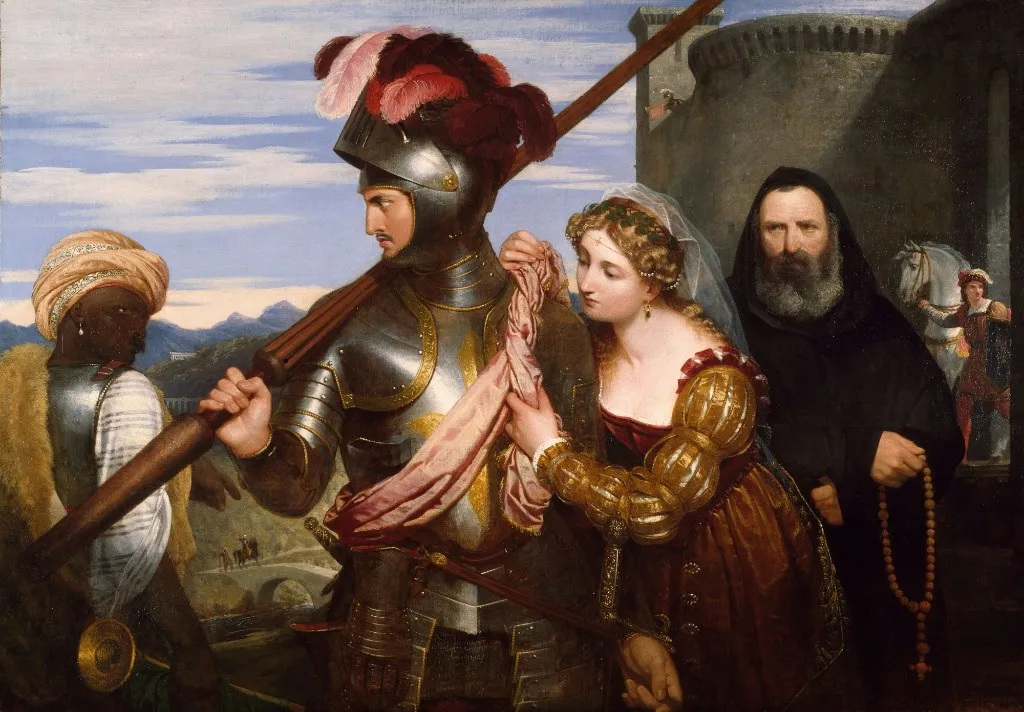
Photo by
Birmingham Museums Trust
on
Unsplash
I think it’s really interesting that in books like this one, the protagonist is conveniently wealthy, and all domestic labor is performed by magic spells, fairy servants, or house elves. After all, the hero couldn’t save the world over and over if he was busy doing his own laundry, planning after-school activities for his three children, or trying to track down the 47 passwords he needs to file his taxes this year.
Author's note
I would really like to see him book a flight on Expedia, squeeze his cloaks, armor, and extra underwear into a carry-on bag, make sure his dagger is in his checked luggage, and plan enough time to take off his boots and check for talismans in his pockets before flying off to confront the Dark Lord. Bonus points if he remembers to pack Advil and sunscreen so he doesn’t have to buy them on the way to the big murder castle.
The hero’s journey, as we usually tell it, is full of hardship — but it is defined by the absence of labor. Arendt saw this clearly. “The daily fight in which the human body is engaged to keep the world clean and prevent its decay,” she wrote, “bears little resemblance to heroic deeds; the endurance it needs to repair every day anew the waste of yesterday is not courage, and what makes the effort painful is not danger but its relentless repetition.”
Which is the real question. In a world with no magic but plenty of bureaucracy — full of dishes and forms and never-ending upkeep that someone has to do — who gets to be the hero? And who has to be the one whose unseen labor makes the heroics possible?
At this stage in my life, I want to do less labor and more work. I want to harness my creativity and direct my energy where I choose. And I also understand that for most of us, this may seem as fantastical as fairy servants or a magical house that does laundry.
Labor is unavoidable. It is an eternal reality of human survival that we must grow crops, care for children, and maintain our spaces and belongings. The real issue isn’t that this labor exists, but that it is unevenly distributed, and some of us are struggling to find opportunities to do meaningful and fulfilling work.
The gift I received from a period of rest wasn’t an immediate, tangible change. It was a vision, a glimpse into how our lives could be different if we weren’t bound to old stories about who gets to do meaningful work and who is supposed to labor to support them. In the meantime, I still have a lot of laundry to do.